
AURA Early Access Sign-up
Put in your phone number below to join the Early Access list for Project Aura!
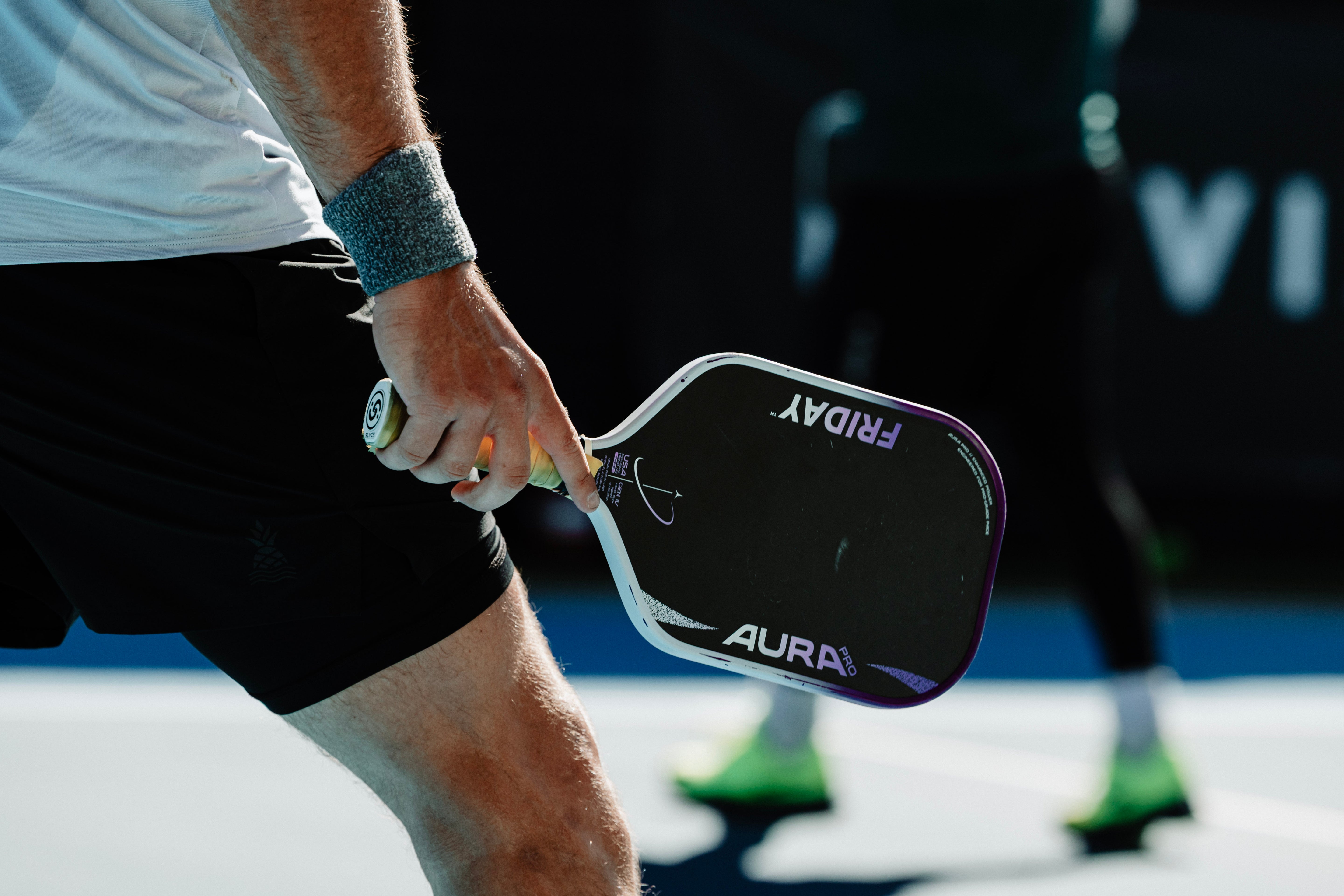
Whether you're a beginner looking for a forgiving sweet spot, or an advanced player looking to push the boundaries of power, we've got the perfect paddle for you.
Both the Aura and Aura Pro are Gen 4 full foam core paddles featuring Friday's patent-pending ElasTECH perimeter weighting system, but they play very differently.
Aura Pro: Loud, Poppy, Explosive
It's double-thermoformed for maximum stability and a massive sweet spot. The full carbon face delivers serious pop for drives and counters. If you're an aggressive player who wants raw power, the Aura Pro is your paddle.
Aura: The Ultimate All-Court Weapon
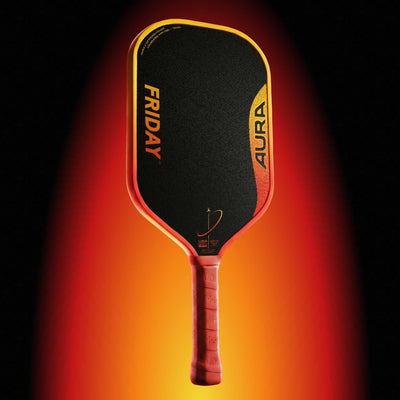
The Aura plays smoother and softer than any other Gen 4 paddle on the market. Four different foams in the core give you immediate feel and sneaky power.
TL;DR: The Aura Pro is built for power and aggression. The Aura is built for feel and all-court play. Both feature Gen 4 foam cores and ElasTECH perimeter weighting.
The Fever 101 and Fever 102 are both Gen 3 paddles with Triple-Layer T700 Raw Carbon Fiber faces, but the 102 is a significant upgrade.
Fever 101 (The Original Fever)
An Elongated paddle that plays lighter and faster at ~7.7 oz. It features 8mm honeycomb cells for extra pop and a narrower profile that slices through the air for more whip and spin. Great for players who love reach, fast hands, and baseline drives. The 101 is available in elongated only.
Fever 102 (The Evolution)
The 102 takes everything great about the original Fever and levels it up with Friday's patent-pending ElasTECH Internal Perimeter Weighting System. A layer of rubber sits between the perimeter foam and the 10mm honeycomb core, resulting in a significantly bigger sweet spot, more stability, and more power. Available in both Elongated and Widebody shapes.
Key Differences:
→ The 102 has ElasTECH perimeter weighting, the 101 does not
→ The 102 uses 10mm cells (more forgiving) vs. the 101's 8mm cells (more pop)
→ The 102 comes in both Widebody and Elongated shapes
→ The 102 is slightly heavier out of the box
→ Both have enhanced durability features to resist core crushing
TL;DR: The Fever 101 is lighter, faster, and snappier. The Fever 102 has a bigger sweet spot, more power, more stability, and comes in two shapes. If you want the best Gen 3 experience, go with the 102.
Welcome to pickleball! Here's the good news: you don't need to spend $250+ on your first paddle. You need something that feels good in your hand, has a forgiving sweet spot, and helps you build good habits.
We recommend starting with the Friday Original. It's been called the "best deal in pickleball" – a carbon fiber paddle with a huge, forgiving sweet spot and fun designs to bring your personality to the courts. It's perfect for learning the game without worrying about mishits.
If you already play another racquet sport (tennis, ping pong, racquetball) and want to jump straight into a performance paddle, take a look at the Fever 102. It's our best-selling Gen 3 paddle and plays way above its $102 price tag.
A few things to consider when buying your first paddle:
→ Weight: Lighter paddles (7.5–7.8 oz) are easier to maneuver. Heavier paddles (8.0+ oz) give more power and stability.
→ Shape: Widebody paddles have a bigger sweet spot (more forgiving). Elongated paddles give you more reach and spin.
→ Grip size: Most paddles come with a standard grip. You can always add an overgrip to make it bigger, or remove the stock grip and replace it with an overgrip to fit your preferences.
→ Budget: You don't need the most expensive paddle to play great pickleball. Start with something solid and upgrade later.
Pickleball skill levels are typically measured on a scale from 1.0 to 5.5+ (often referred to as DUPR). Here's a quick guide:
Beginner (2.0–2.5)
You're still learning the basic rules, scoring, and court positioning. You can sustain a short rally but mishits are common. Most of your shots are forehands.
Intermediate (3.0–3.5)
You understand the fundamentals — dinking, the kitchen (non-volley zone), basic strategy. You can sustain longer rallies and are starting to hit with intention. You're working on your third shot drop and backhand.
Advanced Intermediate (3.5–4.0)
You have a consistent third shot drop or drive. You move to the kitchen line with purpose and can hold your own in dink rallies. You understand stacking, poaching, and shot selection. You rarely make unforced errors on easy balls.
Advanced (4.0–4.5)
You can speed up, reset, and counter with consistency. You place your serves and returns strategically. You can play at the kitchen line comfortably and use a mix of dinks, speed-ups, and lobs. You're a threat in competitive play.
Expert / Pro (4.5–5.5+)
You have exceptional shot-making ability and court awareness. You can execute advanced techniques like spin serves, erne shots, and ATP (around-the-post) shots consistently. You compete at a high level in tournaments.
Friday Paddle Recommendations by Level:
→ Beginners: Friday Original — huge sweet spot, great value
→ Intermediate: Fever 102 — perfect balance of control, spin, and power
→ Advanced: Aura or Aura Pro — Gen 4 foam technology for the serious competitor
Aura Pro
Loud, poppy, explosive. You feel the ball launch off the face. It's aggressive and powerful with a massive sweet spot thanks to the double-thermoformed carbon frame. Built for players who want to dominate from every position on the court.
Aura
Feel the control in every shot on court. The CFC face and core construction gives you a uniquely plush feel — you almost cradle the ball before releasing it. Incredible touch at the kitchen with sneaky power when you need it. It's the paddle that makes you feel like you can't miss.
Fever 102
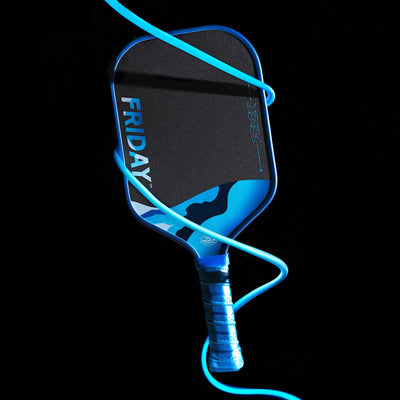
Enhanced Gen 3 technology that allows you to be a true shotmaker. The ElasTECH perimeter weighting gives you a huge sweet spot and consistent response across the face. The Widebody feels like a wall at the net. The Elongated adds whip and reach. Both shapes deliver elite spin from the T700 45 degree raw carbon fiber face.
Fever 101 (Original Fever)
Lively, fast, and snappy. It's lighter and quicker than the 102, with a more compact feel off the face. The 8mm cells give it that signature pop. Feels like an extension of your arm — quick exchanges at the kitchen feel effortless.
The Original
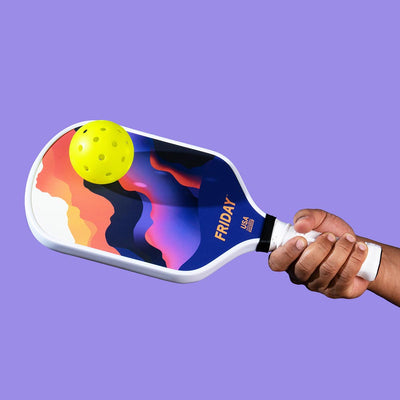
Forgiving and friendly. The huge sweet spot means even off-center hits feel solid. It's a confidence-builder that lets you focus on learning the game instead of fighting your equipment. Fun designs are a bonus.
The Challenger
A great entry-level paddle with solid pop and great grit with a raw carbon fiber face. Perfect for upgrading without a big investment, or for keeping a set on hand so your friends can play too.
Paddle shape affects your reach, sweet spot size, and overall playability. Here's the breakdown:
Elongated (16.5" x 7.5")
A longer paddle that gives you extra reach and leverage. The elongated shape generates more whip on your swing, which translates to more spin and power on drives and serves. The narrower face also cuts through the air faster. The tradeoff is a slightly smaller sweet spot compared to a widebody. Best for players who love baseline drives, topspin, and want that extra inch of reach at the net.
Widebody (16" x 8")
A wider paddle face with a larger hitting surface and a significantly bigger sweet spot. Widebody paddles are more forgiving on off-center hits, which gives you more confidence and consistency — especially at the kitchen line. They also tend to feel more stable on volleys and blocks. Best for players who prioritize control, consistency, and want to feel like they can't miss.
Hybrid / Standard (16.5" x 7.5"–8")
A shape that splits the difference between elongated and widebody. You get some extra reach without sacrificing too much sweet spot. Hybrid shapes are versatile and work well for players who play a balanced game from all areas of the court.
How to Choose:
- Do you play aggressive baseline drives and love spin? → Elongated
- Do you live at the kitchen and want maximum control? → Widebody
- Do you want a bit of both? → Hybrid
- Not sure? The Widebody is the safer choice for most players — the bigger sweet spot is forgiving and confidence-boosting.
"Gen" refers to the generation of paddle construction technology. It's not an official industry standard — but it's the most common way to talk about how paddles are built.
Gen 3 Paddles
Gen 3 introduced the use of a polypropylene honeycomb core enhanced with perimeter foam and a thermoformed construction. Gen 3 paddles are known for their pop, spin, and power. The perimeter foam adds stability and increases the sweet spot. It also creates a diving board effect to allow the ball to dwell on the paddle, creating more spin, shape, and power. Friday's Fever 101 and Fever 102 are Gen 3 paddles — the 102 takes it further with ElasTECH perimeter weighting.
Gen 4 Paddles
Gen 4 takes the polypropylene honeycomb core construction of Gen 3 and replaces it with a foam core. The result is a paddle that’s more durable against core crushing and has a unique feel and sound compared to honeycomb. Foam cores improve feel, stability, and consistency across the entire face. Gen 4 paddles tend to have a more muted and/or hollow feel compared to Gen 3. Friday's Aura and Aura Pro are Gen 4 paddles — both feature full foam cores and our patent-pending ElasTECH perimeter weighting.
Which is better?
Neither is objectively better — they play differently. Gen 3 paddles tend to feel a little more connected to the ball with the ability to shape and create. Gen 4 paddles tend to feel more solid and lively. They also tend to hit harder than Gen 3 paddles. It comes down to personal preference and play style. Many players keep one of each in their bag.
Friday's Gen 3 Lineup: Fever 101, Fever 102 (Elongated + Widebody)
Friday's Gen 4 Lineup: Aura, Aura Pro